
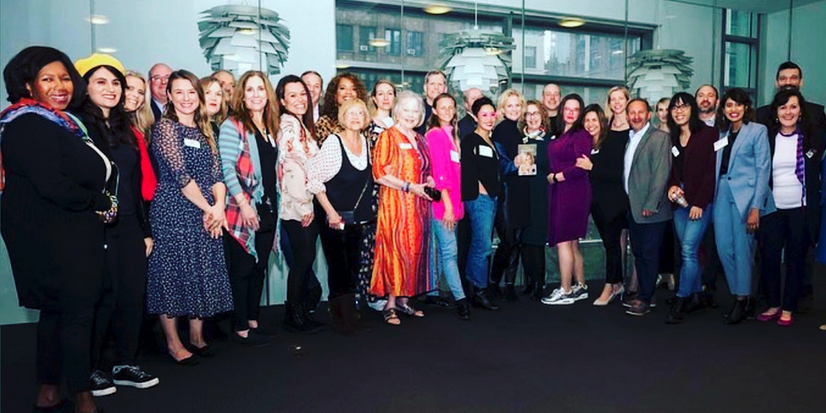
I thought I invented hiding.
I didn’t have language for it. I just had strategies.
Tucking part of me away. Blending in. Overcompensating.
And I honestly thought I was alone. The only one hiding anything.
Then, in a random Walgreens in New York City, I met a woman with the same little hand. We talked for a few minutes. Before we walked away, she mentioned the limb difference community.
Wait. There’s a word for this? And there are other people?
About thirty seconds later, my “I’m the only one” story started to unravel.
Because once you realize you’re not the only one, you breathe differently.
You exhale.
That’s Step 3.
What Step 3 Really Means
Step 1 was Acknowledge.
Step 2 was Invite In.
Step 3 is Build Community.
It means finding people with shared experience, so you stop carrying everything by yourself.
Not everyone.
Not everything.
Just a place where you don’t have to overexplain.
Because hiding thrives in isolation.
And community does two powerful things at once:
It brings relief.
And it builds connection.
It’s the moment you stop thinking, it’s just me, and start realizing, oh. It’s us.
The Part People Miss
Community isn’t something you find once. It’s something you keep choosing.
When I first started going to National Speakers Association meetings, I stayed quiet for months.
Show up. Listen. Leave.
Then one day, I spoke up. Small. Real.
Afterward, there was a happy hour, and I tried to skip it. I told myself I did enough today.
Halfway home, I turned around.
Because sometimes Step 3 is that simple. Don’t retreat. Stay. Let yourself be part of it.
Hiding tells you you’re alone. Community proves you’re not.
The Practical Part
If “build community” feels big, make it small. Pick one:
1) Find one place where you don’t have to overexplain.
An ERG. A recovery group. A professional circle. A faith-based community. A meetup. Start online if that’s easier. The goal isn’t instant closeness. It’s shared language.
2) Make one space you’re already in feel 10% safer.
Pick one small move this week.
- Ask: “What would make this easier?”
- Or say: “I might be missing something. What do you think?”
- Or invite someone in: “I’d love to hear your take.”
Community isn’t built through big speeches. It’s built through small moments.
3) Be someone’s proof.
If you’re further along than someone else, reach back. One note. One invite. One “me too.” You don’t have to carry people. You just have to remind them they’re not alone.
A Note for Leaders
If you’re a leader, Step 3 is not extra.
Employee resource groups (ERGs) and affinity groups are community infrastructure. They reduce isolation and build trust. They make it easier for people to ask for what they need so they can actually do their jobs well.
And beyond ERGs, people learn what’s safe by watching you.
When someone takes a risk, and you respond with respect, you build community.
When you respond with silence, sarcasm, or “let’s move on,” you teach people to hide.
People don’t unhide because you tell them to.
They unhide because they see what happens when someone does.
A Gentle Invitation
Where do you go so you’re not doing this alone?
And if you don’t have that place yet, what’s one small step toward finding it?
Because you didn’t invent hiding.
And you don’t have to unhide singlehandedly.
If you’re feeling stuck, reach out.
And if you have a community that’s helped you, I’d love to hear about it.
Warmest, Ruth
P.S. Next month, we move to Step 4: Share Your Story.
Thank you for being part of the UNHIDING community.
|

